Trumpet technique training step by step
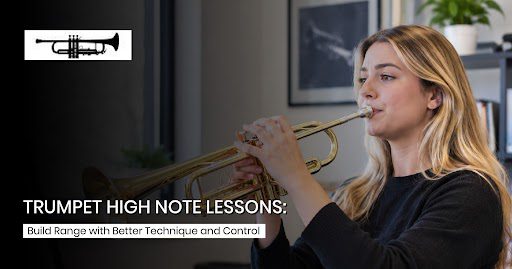
Trumpet High Note Lessons: Build Range with Better Technique and Control
High notes are one of the most exciting—and often most misunderstood—aspects of trumpet playing. When a higher register feels difficult, the instinct may be to push more air, tighten the lips, or press the mouthpiece harder against the face. But developing a reliable upper register is rarely about simply working harder.
Effective trumpet high note lessons should help you understand how your embouchure, airflow, tongue, and overall playing coordination work together. The goal is not just to touch a high note once. It is to develop the control, consistency, and musical confidence to use that register when the music demands it.
Why High Notes Can Feel So Difficult
The upper register places greater demands on coordination. As pitch rises, small changes in embouchure position, airflow, tongue position, and lip vibration can have a noticeable effect on the sound.
That is why simply repeating high notes can sometimes lead to fatigue without creating dependable progress.
A better approach is to understand what is happening physically and then develop those skills gradually. High-register playing should feel coordinated rather than forced.
This is where a thoughtful high note embouchure becomes important.
Build Your High Note Embouchure Around Efficiency
Your embouchure is not something that should become increasingly tense as you climb higher.
A common mistake is to squeeze the lips or increase mouthpiece pressure whenever a note becomes difficult. While some degree of coordination and compression is necessary for upper-register playing, excessive tension can interfere with vibration and make it harder to move freely between registers.
Instead, pay attention to consistency.
Can you establish a comfortable setting? Can you move through different registers without completely rebuilding your embouchure for every note? Can you maintain a centered tone without forcing?
BBTrumpet’s teaching material discusses concepts including Lip SetPoint™, the Lip Aperture Tunnel™, facial-muscle coordination, and approaches intended to reduce unnecessary tension. These ideas are presented as part of a broader system for understanding how trumpet players can coordinate their playing tools more efficiently.
The important takeaway is simple: better high notes begin with better coordination, not simply more effort.
Follow Trumpet Technique Training Step by Step
Developing high notes becomes much easier when you stop treating the upper register as a separate skill.
A structured trumpet technique training step by step approach can help you build the necessary coordination progressively.
1. Establish a Comfortable Sound
Begin in a register where your tone feels stable and relaxed. Make sure the sound is consistent before moving upward.
2. Connect the Registers
Use smooth slurs and controlled register changes to teach your lips, tongue, and airflow to work together.
The goal is to make register transitions feel connected rather than like separate physical movements.
3. Develop Controlled Airflow
Higher notes do not automatically require you to blow as hard as possible. Focus instead on efficient airflow and the coordination needed to support the pitch.
4. Introduce Higher Notes Gradually
Work upward in manageable steps. If your tone becomes strained or your embouchure begins to collapse, return to a comfortable range and rebuild the connection.
5. Bring the Technique Into Music
Once a high-register exercise feels reliable, use it in musical phrases. This helps turn technical range into usable musicianship.
A high note is much more valuable when you can play it at the right moment, with the right tone, articulation, rhythm, and musical intention.
Don't Ignore Tongue Coordination
The tongue plays a much bigger role in trumpet playing than simply starting notes.
BBTrumpet’s material connects tongue position, the “SS” or hiss concept, and anchor tonguing as part of its approach to trumpet technique.
For players exploring anchor tonguing for trumpet players step by step, the important point is to understand coordination rather than simply copy a physical movement.
Your tongue, airflow, embouchure, and articulation need to work together. When those elements are better coordinated, playing can become more efficient and predictable.
This is particularly useful when high-register passages also require clean articulation.
High Notes Need Endurance, Too
Being able to play one high note does not necessarily mean you have developed a dependable upper register.
You also need to be able to use that range without quickly losing tone or control.
This is where trumpet endurance exercises for advanced players can become part of a high-register practice routine.
Long tones, controlled flexibility exercises, register work, and carefully paced high-register playing can all help develop stamina. But endurance practice should not mean repeatedly playing until the lips are exhausted.
Rest is part of the process.
A useful practice session might alternate demanding high-register work with easier playing, giving your embouchure time to recover while still maintaining coordination.
Practice High Notes as Music, Not Just Numbers
It is tempting to measure progress by asking, “How high can I play?”
That question can be useful, but it should not become the only measure of improvement.
Imagine two players. One can hit a very high note for a moment but struggles to control its tone, articulation, or musical placement. The other has a slightly smaller range but can use every note confidently within a melody.
The second player may be more musically effective.
BBTrumpet’s own high-note guidance specifically encourages players to play songs in the upper register rather than treating range as nothing more than an exercise.
Try taking a familiar melody and gradually moving selected phrases higher. Listen for tone quality, phrasing, articulation, dynamics, and consistency.
This gives your high-register work a musical purpose.
What Should a Trumpet Instructor Help You Identify?
A good trumpet instructor should do more than tell you to practice higher.
They should help you understand why a particular note or passage is difficult.
For example, the issue might involve:
- Excessive mouthpiece pressure
- An inefficient embouchure setup
- Poor coordination between breath and articulation
- Unnecessary facial tension
- Inconsistent tongue position
- Insufficient recovery between demanding exercises
- Trying to force notes that are not yet ready for comfortable repetition
BBTrumpet’s teaching philosophy places considerable emphasis on identifying the underlying mechanics of a player’s technique rather than simply prescribing more repetitions. Its “Study Trumpet with Pops” page describes concepts involving embouchure systems, facial muscles, airflow, compression, tongue coordination, and mouthpiece pressure.
That kind of diagnostic thinking can make practice much more productive.
A Smarter High-Note Practice Structure
If you are working on your upper register, consider organizing your session around progression rather than maximum height.
Start:
Play comfortable notes and establish a stable tone.
Connect:
Use smooth slurs and register transitions.
Develop:
Introduce controlled higher notes without forcing.
Recover:
Return to easier playing and allow your embouchure to reset.
Apply:
Use your developing range in melodies, exercises, or musical passages.
Review:
Notice where tone, coordination, or comfort begins to change.
This approach keeps high-note practice connected to the rest of your trumpet technique instead of turning it into a daily test of how high you can go.
About BBTrumpet
BBTrumpet’s Study Trumpet with Pops resource introduces players to the teaching approach of Clint “Pops” McLaughlin, including concepts such as Lip SetPoint™, the Aperture Tunnel™, facial-muscle coordination, airflow and compression, anchor tonguing, and techniques intended to reduce unnecessary mouthpiece pressure. The site also presents instruction as an ongoing learning process, with examples of experienced players continuing to study and refine their technique.
For players interested in high-register development, this perspective is valuable because it shifts the focus from simply chasing higher notes toward understanding the coordination behind them.
Make High Notes Part of Your Musical Voice
Developing the upper register takes patience. There may be days when a note feels effortless and others when the same note feels surprisingly difficult.
That is normal.
Rather than judging every practice session by your highest note, pay attention to the quality of your process. Are your transitions smoother? Is your tone more consistent? Are you using less unnecessary tension? Can you articulate comfortably in the upper register? Can you bring those notes into actual music?
Those are meaningful signs of progress.
The best trumpet high note lessons should ultimately help you do more than expand your range. They should help you understand your instrument, improve your coordination, build reliable technique, and use the upper register as naturally as possible in your playing.
High notes become much more useful when they stop being a challenge to conquer and start becoming another part of your musical vocabulary.
Frequently Asked Questions
1. What should I focus on first when learning high notes on trumpet?
Start with a comfortable, consistent tone in your existing range. Then work on embouchure coordination, airflow, flexibility, and gradual register development before repeatedly attempting your highest notes.
2. How can I develop a better high note embouchure?
Focus on consistency and efficiency rather than simply tightening your lips. Excessive mouthpiece pressure or facial tension can interfere with flexibility. A qualified instructor can help identify what is happening in your individual setup.
3. Are high-note exercises enough to improve my upper register?
Not necessarily. Exercises can develop coordination, but applying your range to melodies and musical passages helps you learn to use high notes with appropriate tone, articulation, phrasing, and expression.
4. How does anchor tonguing relate to high-register trumpet playing?
Tongue position and articulation are connected to airflow and overall coordination. Studying anchor tonguing as part of a broader technique system can help players better understand how the tongue contributes to efficient trumpet playing.
5. How often should I practice high notes?
High-register work should be introduced gradually and balanced with easier playing and sufficient rest. The goal is consistent development without repeatedly exhausting your embouchure.