Asymmetrical Mouthpiece
There have been mouthpieces made for people with mouth malformations that were Not symmetrical. The Asymmetrical Mouthpiece rim was offset to avoid a bad spot in their dental structure.
A second type is an oval shape were made in the mistaken belief that it would help in the upper register. Think about a piano string it can play higher by tension or by making it shorter. Tension works to a point but after that the mouth corners should come in to shorten the vibrating surface. This was suggested by lots of teachers Farkas included. The oval shape works against this for some players because of their embouchure.
A third type is an off shoot of double cups. Instead of the sides being shallow and the center deep they make the top half deep and bottom half shallow. If you don’t place it perfectly on your lips, then you end up with the shallow part stopping the buzz by touching the wrong lip. Lots of bad air deflection going on in the cup. Pivoting can be messed up. Plus, total cup volume is what determines the tone color factors and here total volume is lacking.
Examples of the 3 main types are Cauffman, Lynch and the Wedge.
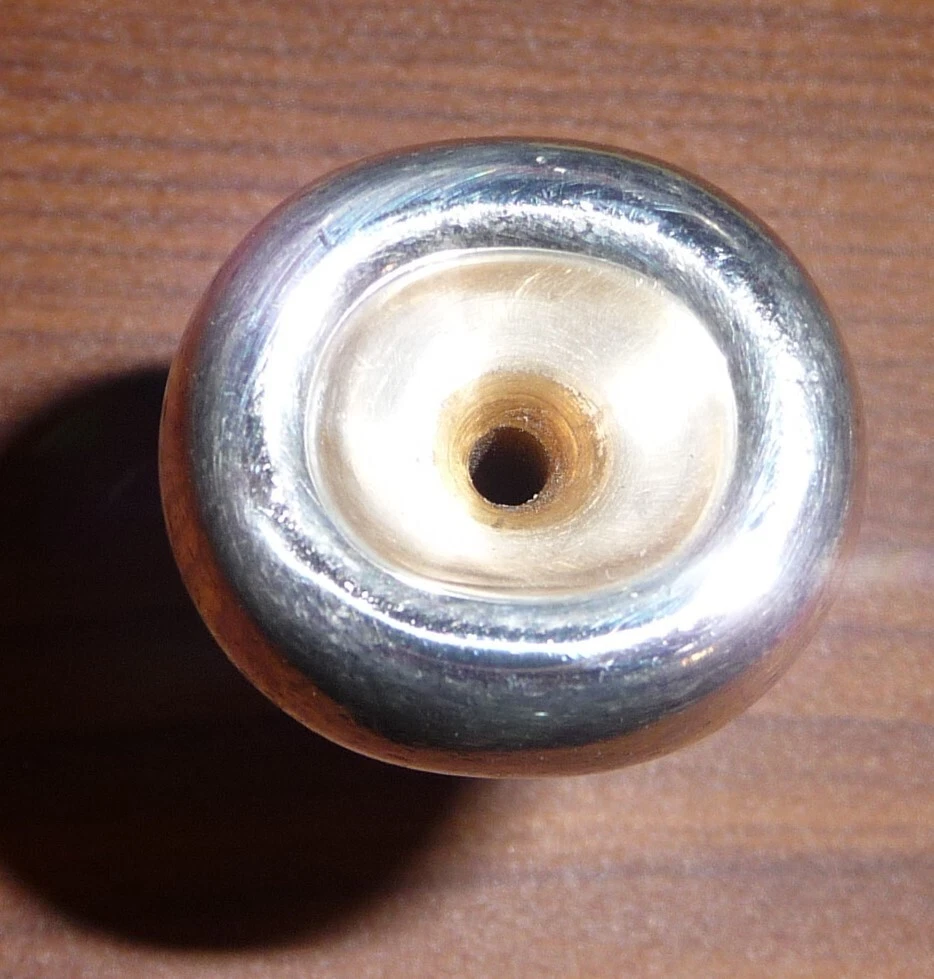
The Cauffman Hyperbolic Asymmetric Oval Trumpet Mouthpiece was from the 1950s. It is oval and not round like most brass mouthpieces.
.
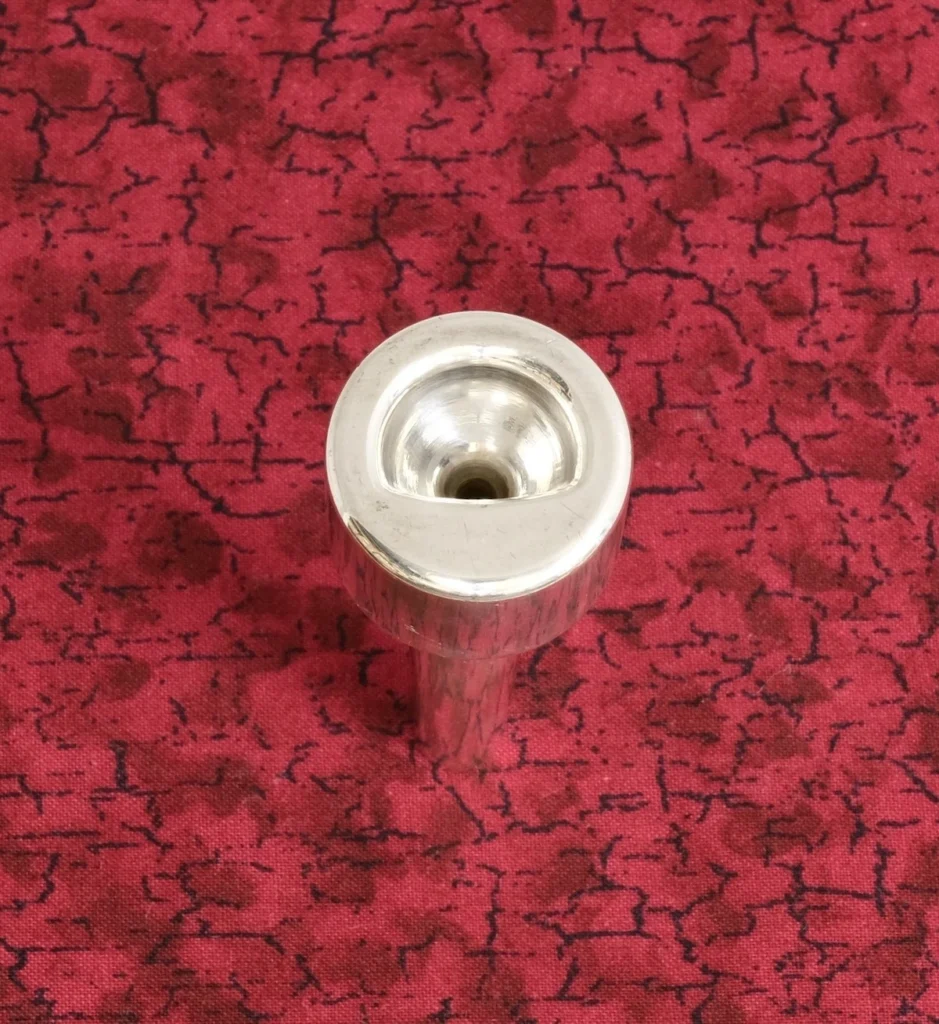
The John Lynch Asymmetric Mouthpiece is still being made as of 2026. It is semi round and has a flattened shelf where the bottom lip sits.
The New Asymmetric Trumpet Mouthpiece
.
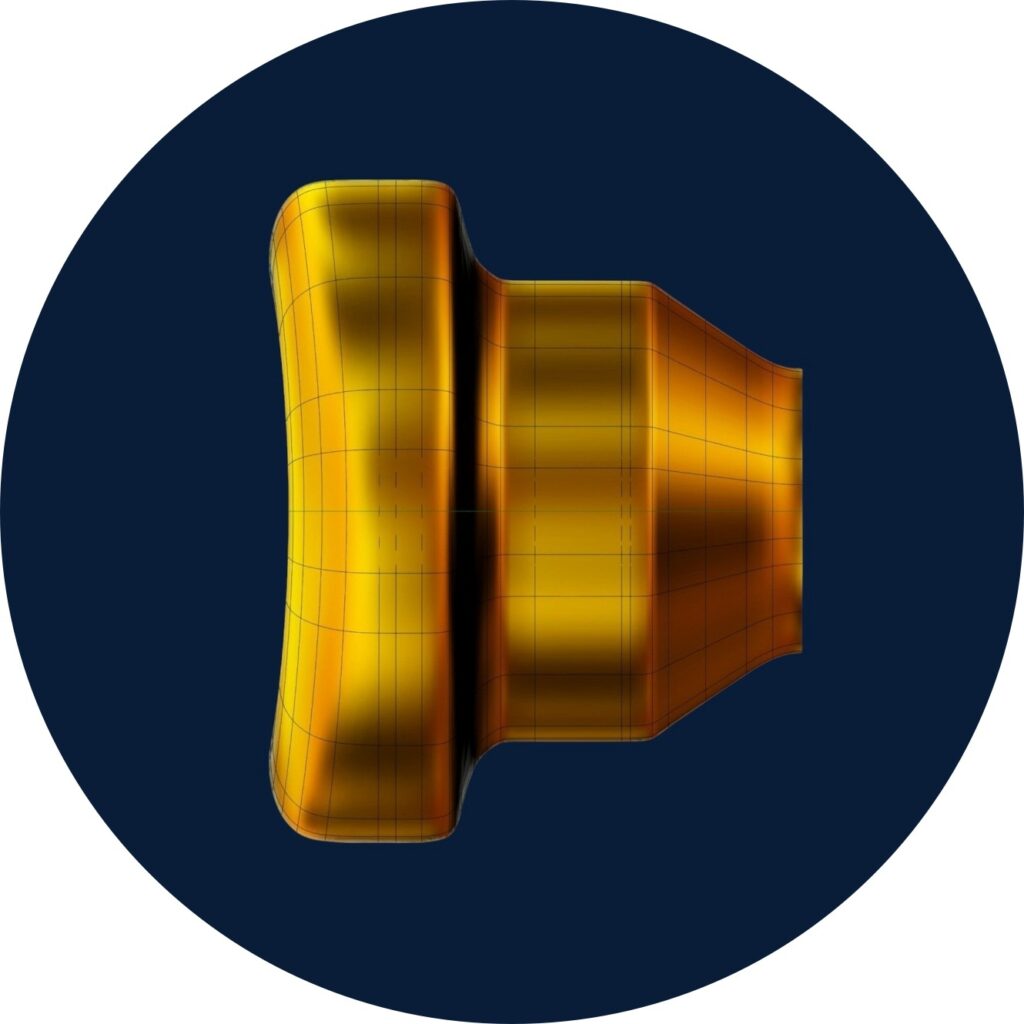
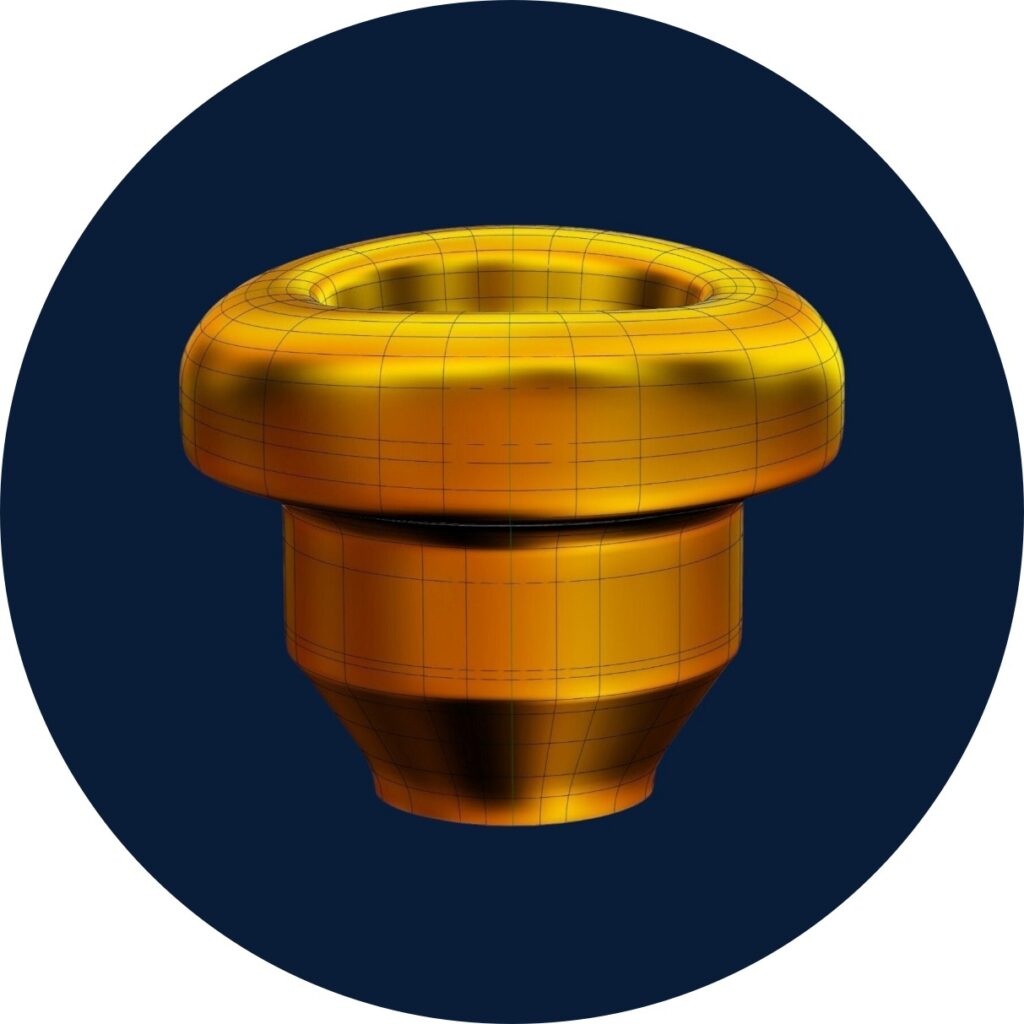
Lastly the Wedge Trumpet Mouthpiece which is still being made as of 2026. The mouthpiece has a slight oval shape, and the rim is highly altered to sit differently on the embouchure.

.
Slightly Oval shape.
.
.
Sides of the rim cut away to sit on the mouth better.
.
.
The entire rim taper is cut on all sides to sit differently from more conventional mouthpieces.
Pops